







IEC 60601-1 explained: Key motor selection considerations for medical devices
-
Health & wellness
24 Feb. 2026
Medical devices must adhere to stringent safety standards from the initial design phase to protect both patients and healthcare professionals. For medical electrical (ME) equipment, the international standard IEC 60601-1 serves as the essential safety foundation. This article provides an overview of IEC 60601-1 and outlines critical considerations for selecting motors that ensure compliance with this standard.
What is IEC 60601-1?
IEC 60601-1 is an international standard that defines the general requirements for the safety and essential performance of ME equipment.
Compared to IEC 62368-1, which covers audio/visual and IT equipment, IEC 60601-1 imposes more stringent requirements, particularly in defining protection levels, essential performance and labeling through risk management processes, due to its direct impact on human life and health.
The IEC 60601 family is structured with IEC 60601-1 as the “General Standard” at its core. In addition, a set of supplementary standards, known as “Collateral Standards”, are defined to complement its requirements.
These collateral standards consolidate requirements related to common characteristics and functions of ME equipment. Examples include:
- IEC 60601-1-2: Electromagnetic compatibility (EMC)
- IEC 60601-1-6: Usability engineering
- IEC 60601-1-8: Alarm systems
Together, these standards extend the general requirements and systematically define the common requirements applicable to ME equipment.
In addition, for certain types of ME equipment, there are particular standards that define device-specific safety and performance requirements. These standards are based on the general and collateral standards of IEC 60601-1, while adding, modifying, or removing specific requirements as needed. For example, in the case of hearing aids, the particular standard JIS T 0601-2-66 (IEC 60601-2-66) applies, and ASPINA’s body-worn hearing aids are also designed in compliance with this standard.
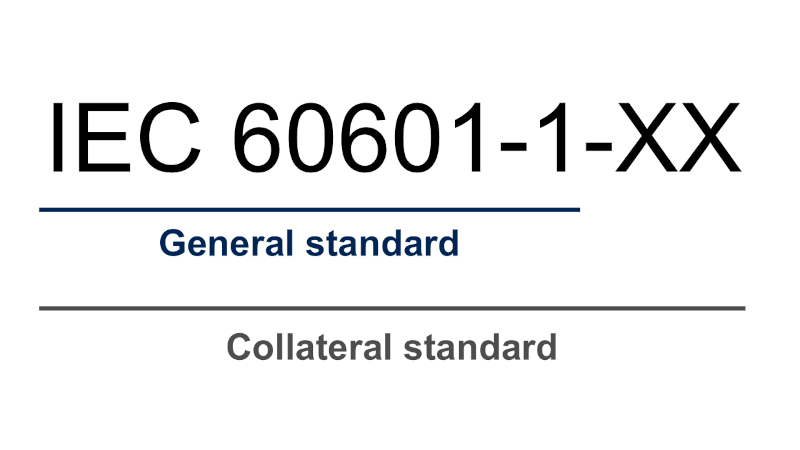 Structure of general and collateral standards in the IEC 60601-1 family
Safety and performance requirements for ME equipment under IEC 60601-1
To ensure the safety and performance of ME equipment, IEC 60601-1 defines several key requirements, including the following:
- Protection against electrical hazards
- Mechanical safety
- Protection against excessive temperature and fire
- Electromagnetic compatibility (EMC)
- Essential performance
Protection against electrical hazards
This requirement addresses protection against hazards such as electric shock.
A key feature of IEC 60601-1 is that it accounts for both operators and patients coming into contact with the equipment, which distinguishes it significantly from standards in other industries. Since the required level of protection differs for operators and patients, strict criteria are defined for insulation strength, creepage distances and clearance distances.
In particular, patients may have longer and more extensive contact with ME equipment than operators; therefore, the requirements for patient protection are more stringent.
Mechanical safety
This category addresses protection against mechanical hazards, including injuries caused by moving parts, such as pinching or crushing, as well as harm from sharp edges and corners. It also includes ensuring the stability of the equipment during operation and transport to prevent tipping or falling. In addition, measures are required to protect against risks arising from drops, vibration, and mechanical shock.
Protection against excessive temperature and fire
This covers protection against temperature-related hazards, including the prevention of excessive surface temperature rise and the mitigation of fire hazard through the use of flame-retardant design and materials.
Electromagnetic compatibility (EMC)
EMC covers both electromagnetic emissions generated by the equipment (EMI) and immunity to external disturbances (EMS), ensuring that the equipment operates properly without adversely affecting itself or nearby devices. For ME equipment, these requirements are more stringent than those of IEC 62368-1, which applies to audio/visual and IT equipment, due to the high risks associated with healthcare environments and potential malfunctions. For example, stricter limits are applied to emissions and to immunity against disturbances such as electrostatic discharge. Detailed EMC requirements are specified in the collateral standard IEC 60601-1-2.
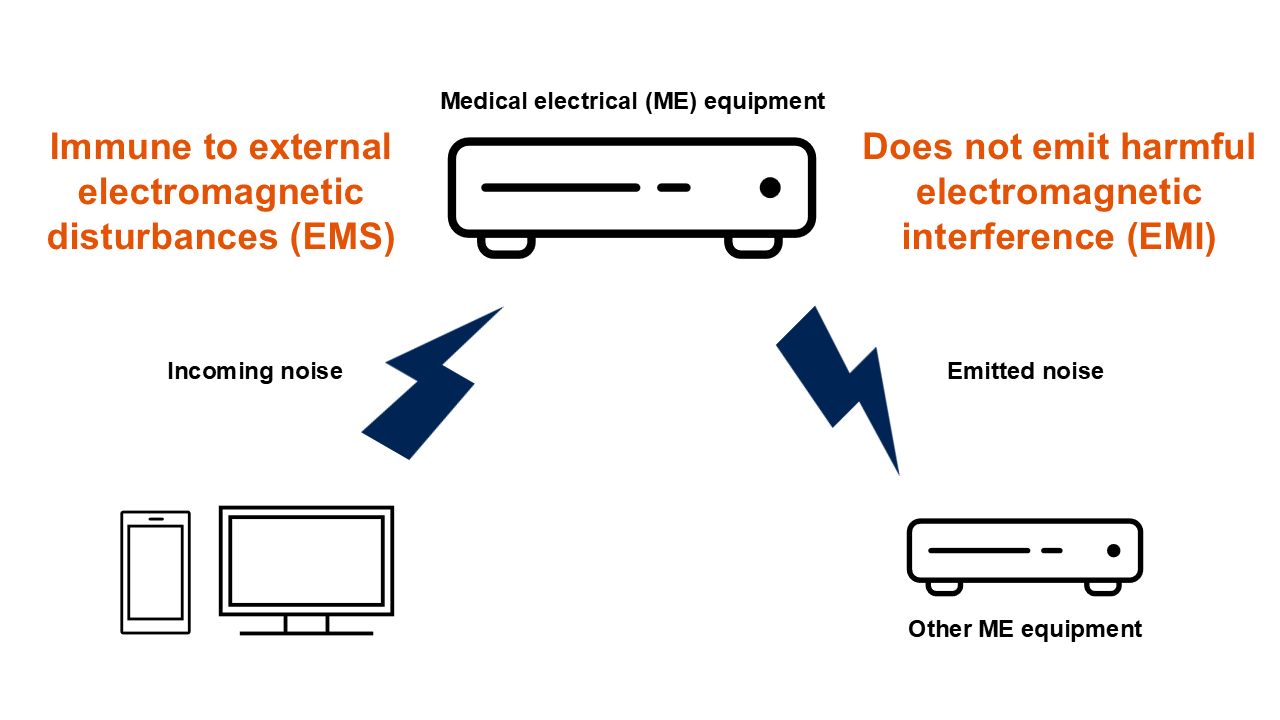 EMC concepts in ME equipment: emission (EMI) and immunity (EMS)
Essential performance under external influences
IEC 60601-1 requires that both essential performance and safety be maintained, even when ME equipment is exposed to external influences such as drops, mechanical shock, electromagnetic disturbances and temperature changes.
In IEC 60601-1, essential performance is identified through a risk management process as the functionality that the equipment must maintain under normal use. Examples of essential performance include patient monitoring alarms, diagnostic measurements and drug delivery functions.
ASPINA’s key recommendations for selecting motors under IEC 60601-1
While IEC 60601-1 does not explicitly define specifications for motors themselves, several critical factors must be considered when selecting motors for medical devices to ensure system-level compliance. These include requirements related to protection against electrical and thermal hazards, as well as EMC.
Protection against electrical hazards
Motors themselves do not directly prevent leakage current at the system level. However, selecting an appropriate motor, for example, one with a lower drive voltage, can reduce the necessary insulation level and simplify the insulation structure. This approach can help meet IEC 60601-1 requirements while contributing to more compact designs and improved cost efficiency for the medical device.
Protection against thermal hazards
Motors are one of the primary heat sources in ME equipment. To minimize heat generation, it is essential to select a motor that operates with high efficiency while delivering the required output. Motor efficiency is influenced by various factors, including motor type, drive voltage, winding specifications and magnet strength. These factors are determined during the motor design stage. In some cases, customizing motor specifications to match the specific operating point of the application can be highly effective.
Considerations for EMC design
IEC 60601-1-2 defines EMC requirements for both radiated and conducted emissions. Notably, stricter EMC measures are required for home healthcare environments in conjunction with IEC 60601-1-11.
Motors and their drive circuits are potential sources of electromagnetic noise, such as harmonic and common-mode noise, which often complicates EMC design and requires filtering, shielding, and grounding strategies. Since noise characteristics vary depending on the motor type and drive method, careful motor selection is critical to optimizing the EMC design of the medical device.
Summary: Selecting motors for IEC 60601-1-compliant medical devices
Medical devices must meet exceptionally high safety standards to protect both patients and healthcare professionals. IEC 60601-1 defines strict requirements for addressing various hazards, including measures related to insulation, leakage current, grounding and other critical safety aspects.
Accordingly, when selecting motors for medical devices, it is essential to consider protection against electrical and thermal hazards, as well as EMC requirements.
Since 1962, ASPINA has been a specialist in the precision motor industry. We are committed to supporting motor selection and providing customization tailored to our customers’ specific requirements.
If you have any questions or require support with motor selection, please do not hesitate to contact us.
Related information
-
Integrated noise and airflow-path design: A blower box that reduces medical device development effort
-
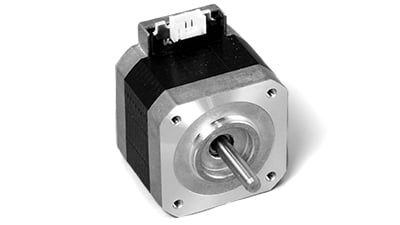
NEMA17 stepper motor selection guide: Mounting dimensions, applications, selection and problem solving
-
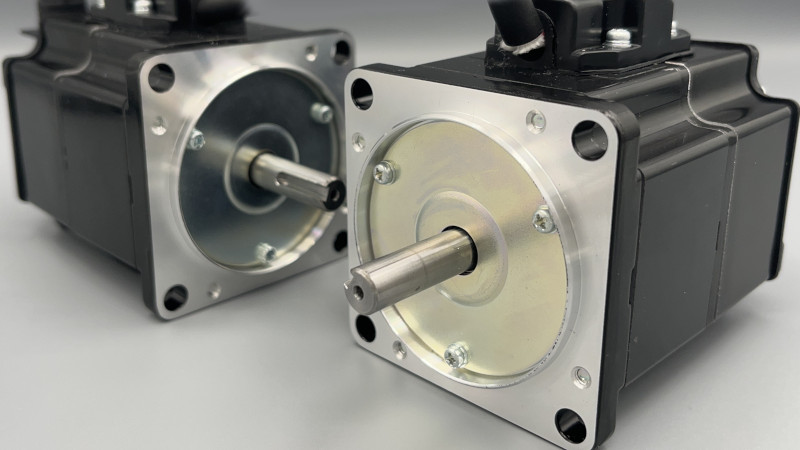
ASPINA’s new servo motors enhance competitiveness in medical device development
-
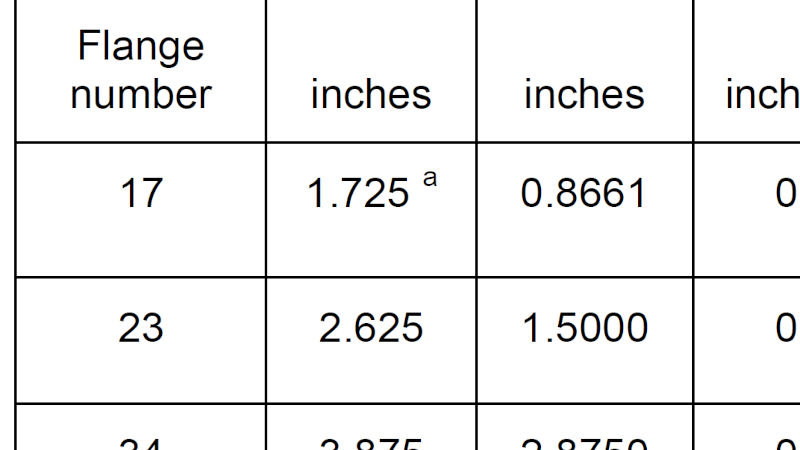
NEMA stepper motor sizes chart and selection guide
Contact us for more information
- New inquiry
- Prototype
- Upgrade
- Customization
- Your spec
- Literature
- Support
- Others